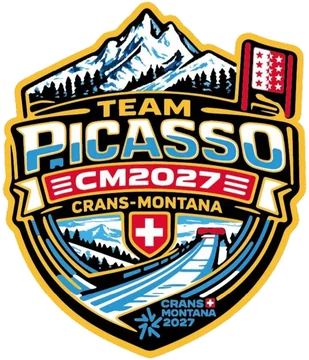
 The Golden 25 · The Team Picasso pin
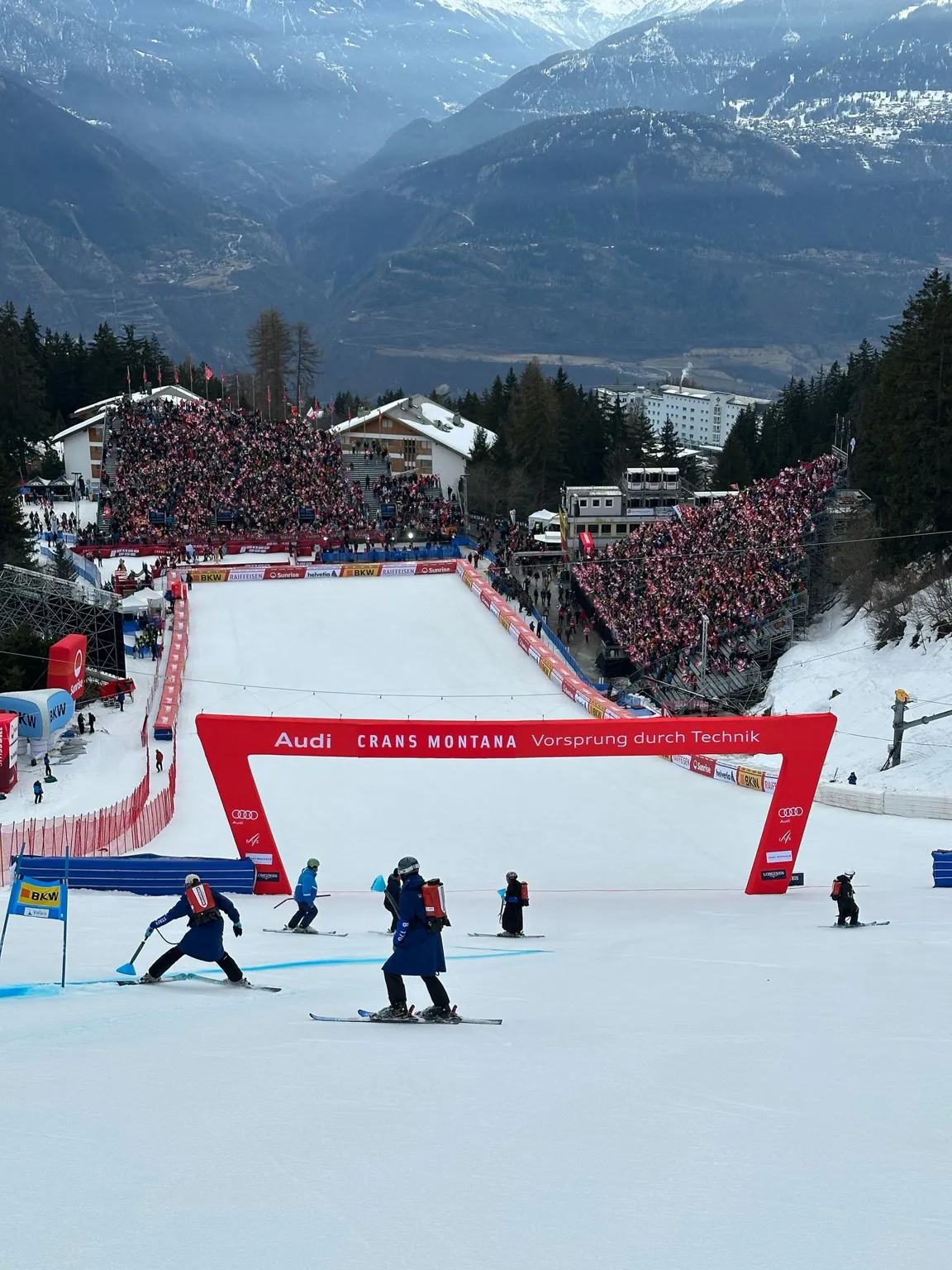
 World Cup 2026 · Crans-Montana
✚ Crans-Montana · Worlds 2027
The artists of the piste.
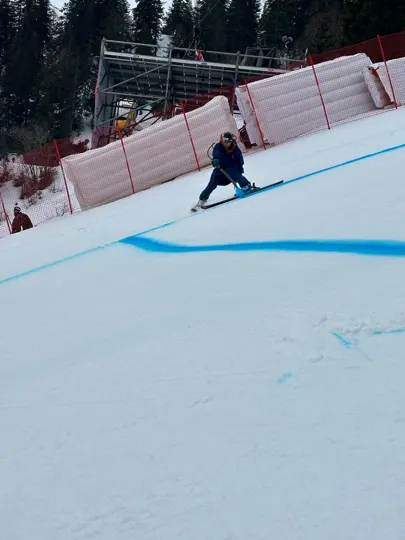
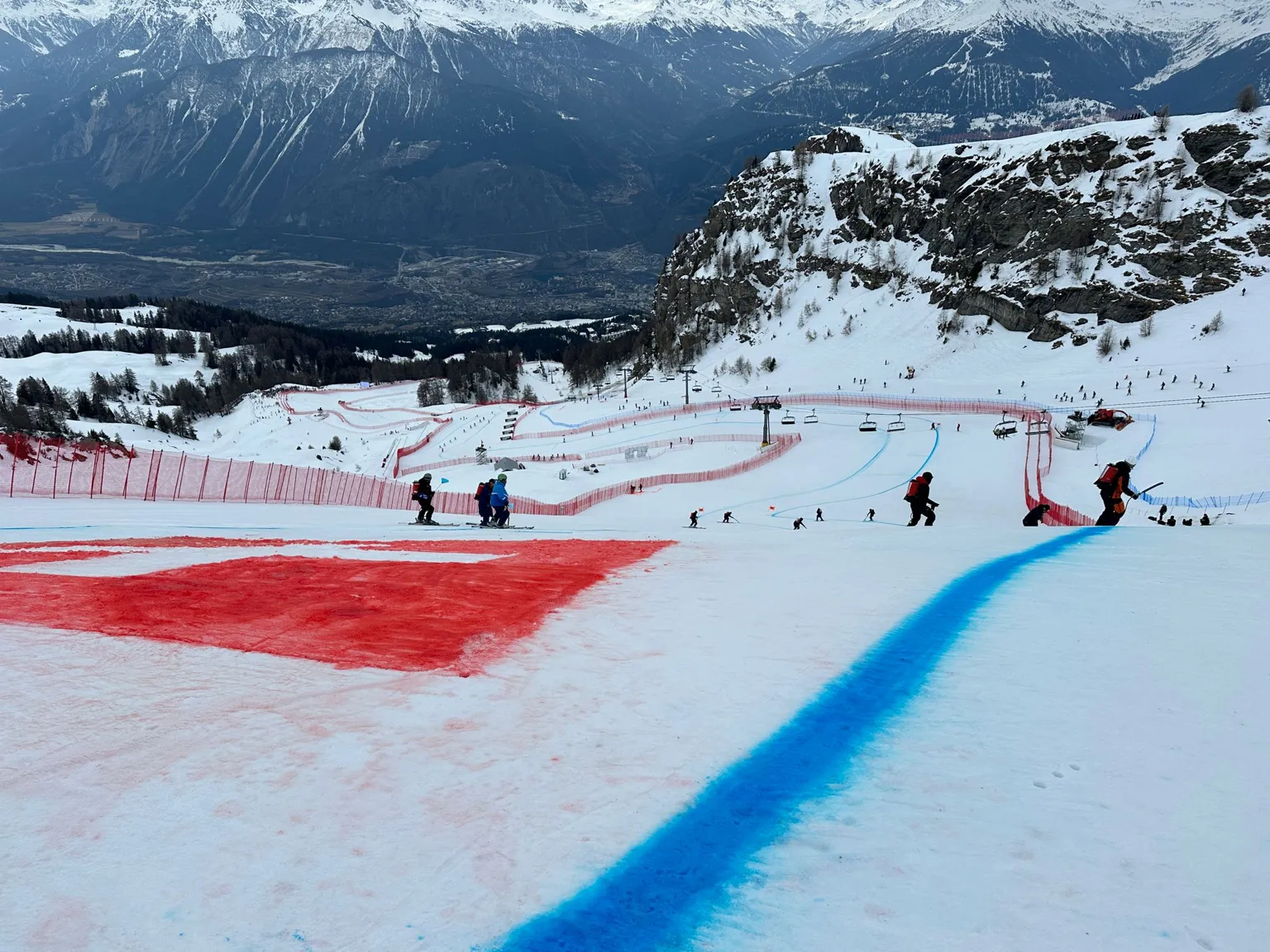
In Crans-Montana, we’re the volunteers who draw the blue lines on the racecourse. On skis, spray lance in hand, we mark the bumps and changes in slope before the first racer starts.
From the hut to the last blue line.
Follow the volunteers from the hut to the course. We fill the backpack sprayers, step into our skis and lay down the first blue line.
Who draws the blue lines on a ski race course?
Look at the volunteer’s hand in the photo. The spray lance is connected to the tank on their back. The crew calls this backpack sprayer a “boille”.
Under an overcast sky, a bump can blend into the slope behind it. A long blue curve helps racers spot the gates. A short line across the snow shows where the ground drops away.
Each racer chooses their own line between the gates.
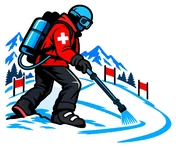
Discover what we do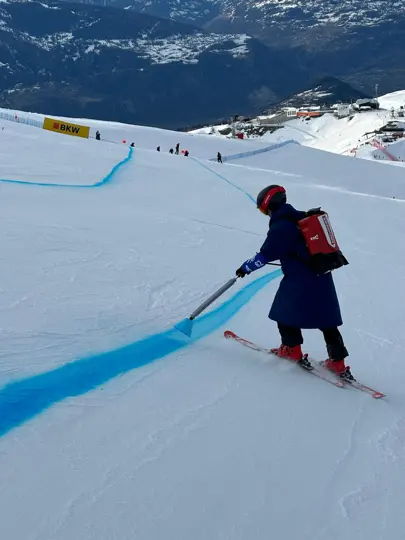
See the markings on the snow

Questions from the side of the course
Discover what a Picasso does →Why are the lines blue?
Blue stands out against white snow. When shadows fade, that contrast helps racers pick out changes in the terrain.
Why are the volunteers called Picasso?
In the team we tell it as a nod to the painter Pablo Picasso. Our pictures stay on the snow until the next snowfall.
Do you work during the race?
Yes. If a line fades, we wait for the request and radio clearance. The pair then enters its sector during a break in racing.
What makes a smooth line tricky to draw?
Your skis are moving while your hand follows the snow with the lance. At each break in the slope you need to adjust to keep the mark even.
Do you need to be an excellent skier?
Yes. You need to move confidently on steep, hard race snow, carrying your kit and skiing without poles.
Do racers have to follow the blue line?
Each racer decides how to ski between the gates. The blue marks help them read the terrain and set up for what comes next.
Behind the scenes with the Picasso crew
On a World Cup ski course, there’s no second take.
When the go-ahead comes over the radio, the lance has to be ready. We call it “One Shot”. A frozen pump, a handover on a steep pitch and fingers still blue at the end of the day tell the rest of the story.
A day with the Picasso crew
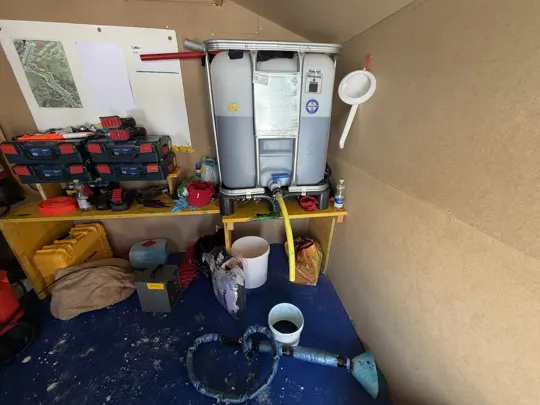
The tank and yellow hose are ready for the next refill. Long before the first start
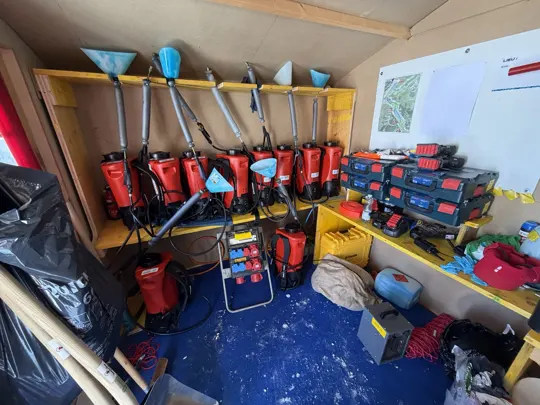
In the hut we fill our ‘boilles’, the backpack sprayers. We check the batteries and test each lance before we head out.
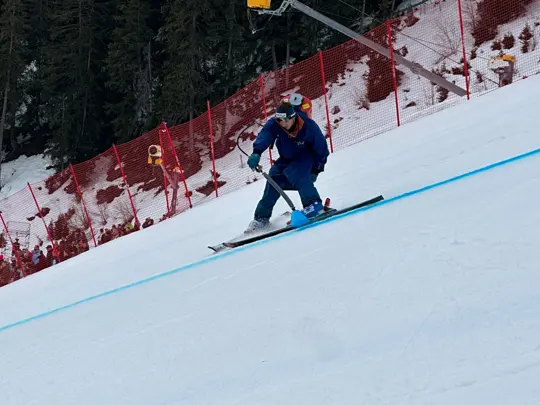
The blue spray hood follows the marker’s hand just above the snow. Time to draw the course
With skis on and poles left behind, each pair heads to its sector. The marks need to be in place before course inspection, when the racers get their first look at the set course.
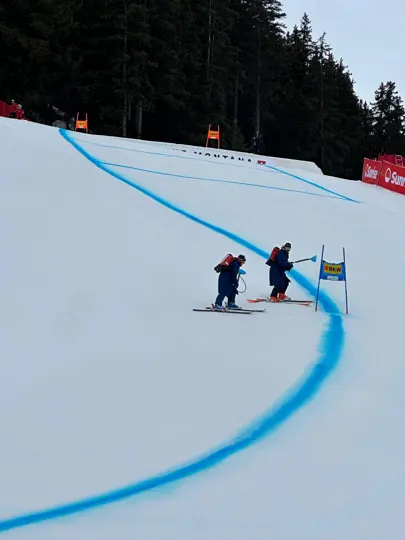
Look beside the gate for the long blue curve and two crew members on skis. During the race
Fresh snow can hide the blue beside a gate. If a mark needs touching up, the call comes over the radio. We wait for a break in racing and clearance before going back onto the course.
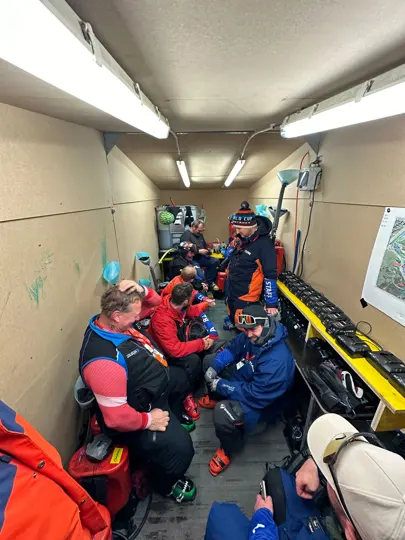
Back in the hut, the volunteers share the bench space with their gear. A team behind every line
When a pair comes back, the hut crew take over. Someone gets the next refill ready, checks a connection or gets a lance working again.
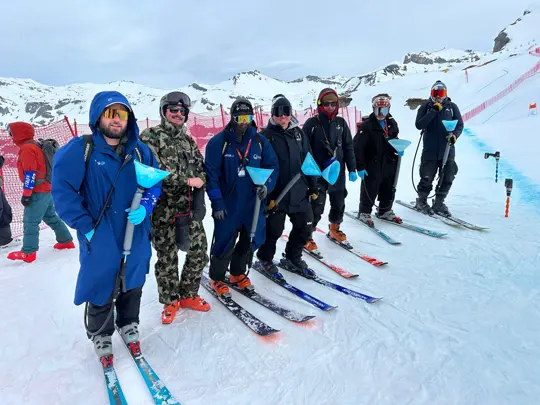
Our home slopes at the 2027 World Championships
From 1 to 14 February 2027, around thirty volunteers from Switzerland and abroad will share the marking duties on Mont Lachaux and the Nationale. Annick Bonzon leads the marking crew on Mont Lachaux and Fabien Dischinger on the Nationale.
While the stands fill up, someone is topping up sprayers in the hut and someone else is riding the lift back to their sector. By the time the first bib is on course, everyone has had a hand in those lines.
Our coach, Bruno Böhlen, head of the blue team in Wengen →
From tank to snow
The nozzle at the end of the lance shapes the spray. The hood around it helps shield it from the wind.
Where does the Picassos’ blue come from?
How we work →Gallery
Explore the gallery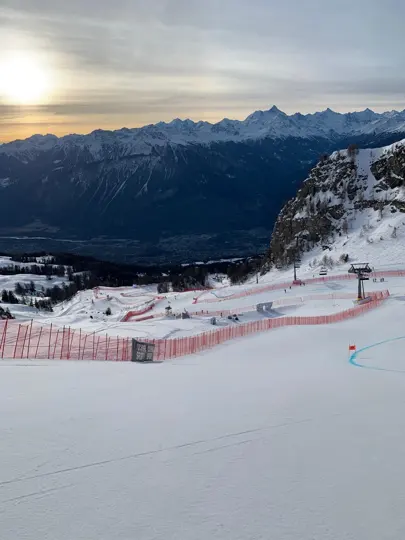

The team collection
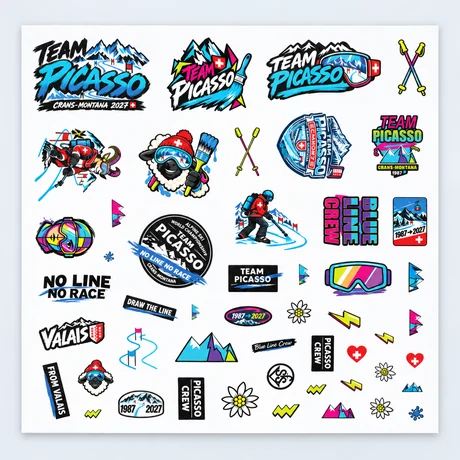
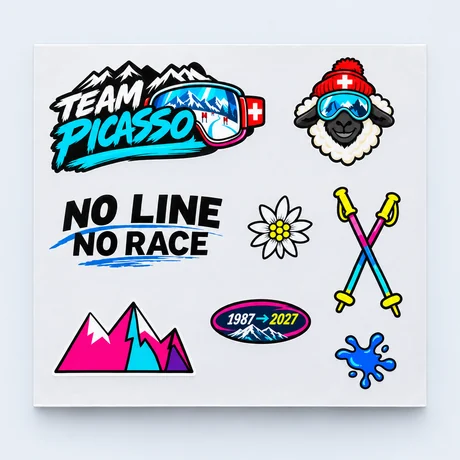
I made these pins, stickers and temporary tattoos to thank the Team Picasso volunteers and give them a keepsake from the World Championships in Crans-Montana. I paid the production costs up front myself. If you buy a sheet of stickers or tattoos, or win one of the 25 pins at auction, you help me cover part of those costs. Thanks for lending a hand!
Fabien Dischinger

Two Swiss suppliers behind the scenes
 Protection against freezingFor frost protection, we use Riwax, a Swiss company based in Zollikofen.Visit the Riwax website ↗
 The backpack sprayerFor us, the “backpack sprayer” is the red sprayer from Birchmeier. On skis, without poles, it is with your spear that you draw the line.Visit the Birchmeier website ↗